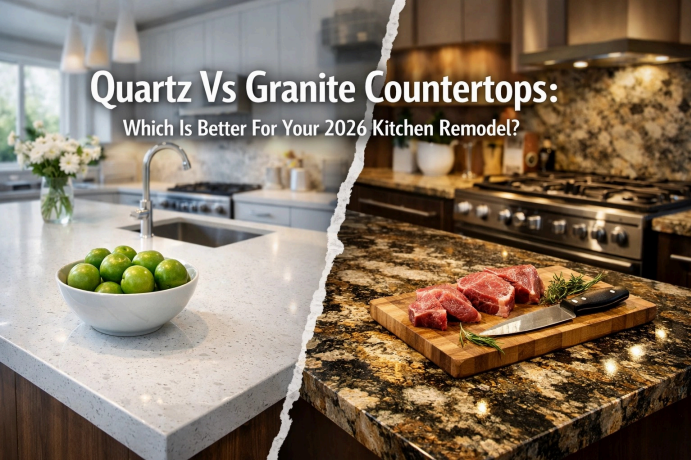


Granite vs Quartz for Busy Kitchens: Which Wins?
Granite vs Quartz for Busy Kitchens: The Bottom Line
Choosing between granite vs quartz for busy kitchens comes down to one core trade-off: granite forgives heat, while quartz shrugs off stains but flinches at high temperatures. If you regularly set hot pans down straight from the stove, granite is the safer bet. If red wine spills and tomato sauce are your daily reality, quartz cleans up faster. At Luther Falls, we've installed both surfaces for four generations and watched how each performs under real family wear, not just showroom conditions.
Granite is a natural igneous stone with high hardness and genuine heat tolerance ( usgs.gov). Quartz is an engineered stone made from crushed minerals bound with resin, which makes it non-porous and maintenance-free. The decision gets complicated when you factor in daily habits, cleaning products, and how long you plan to stay in your home. Below, we'll walk through heat, stains, maintenance, sealing, cost, and design so you can match the right material to the way your kitchen actually runs. We'll also flag what most guides miss: chemical sensitivity, repairability, and edge profile durability.
Heat Resistance: Can You Set a Hot Pan Down?
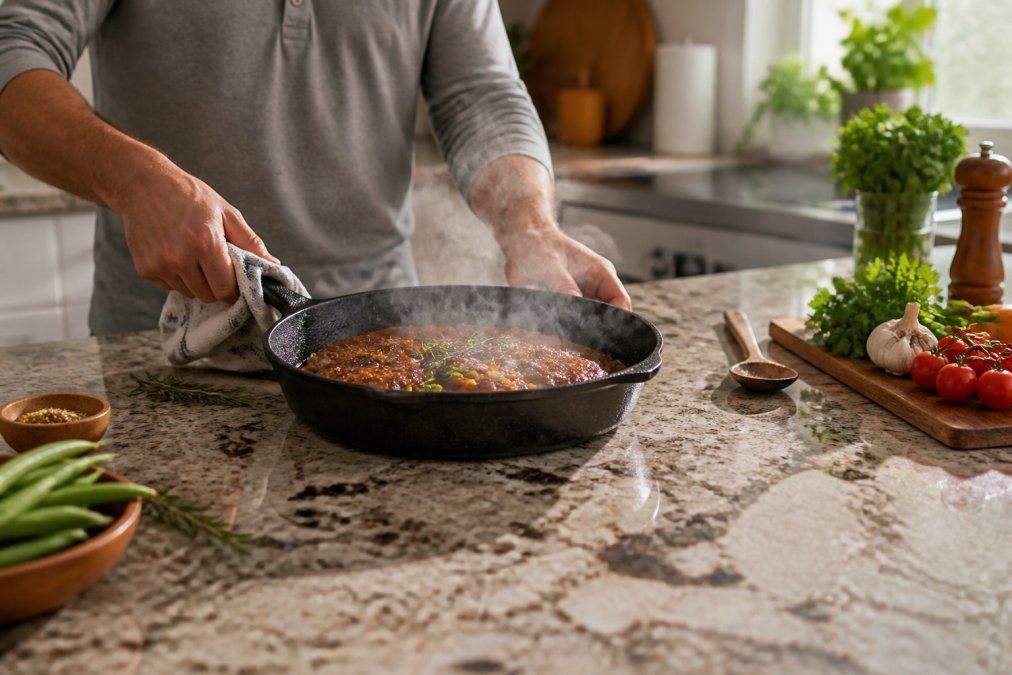
Granite wins this round decisively. As a natural stone formed under intense heat and pressure, granite handles a hot skillet without damage. Quartz, by contrast, contains resin-based binders that can scorch or discolor when exposed to high temperatures ( peer-reviewed research). Setting a hot pan directly on quartz risks permanent marks that no cleaner will remove.
For busy cooks who move fast, granite's heat tolerance removes a constant worry. You still want trivets for good practice, but granite forgives the occasional slip. Quartz demands vigilance: always use a trivet or hot pad. If your household includes multiple cooks, teenagers, or anyone in a hurry, granite's margin for error is worth serious weight.
Stain Defense and Porosity: Red Wine and Tomato Sauce
Quartz answers the stain question with a clear advantage. Its non-porous surface means red wine, tomato sauce, and coffee have nowhere to penetrate. A quick wipe with soap and water handles most spills before they become a problem. This makes quartz especially practical for households where spills happen and cleanup waits until after dinner.
Granite's porosity is the trade-off for its natural beauty. Unsealed granite absorbs liquids, which is why sealing matters. A properly sealed granite surface resists stains well.
Quartz Countertop Maintenance Tips for Busy Cooks
Quartz countertop maintenance tips start with understanding what you don't need to do. Daily care means wiping with mild soap and water. Avoid abrasive scrubbers and harsh chemical cleaners, which can dull the surface finish over time.
For tougher messes, a soft cloth with a bit of dish soap handles most situations. Dried-on food may need a gentle plastic scraper. Steer clear of acetone, paint strippers, and oven cleaners; these chemicals can damage the resin binders permanently. This chemical sensitivity is a point many guides miss. Quartz looks tough, but its engineered composition means certain cleaning agents are off-limits, especially bleach products.
Design Flexibility, Edge Profiles, and Repairability
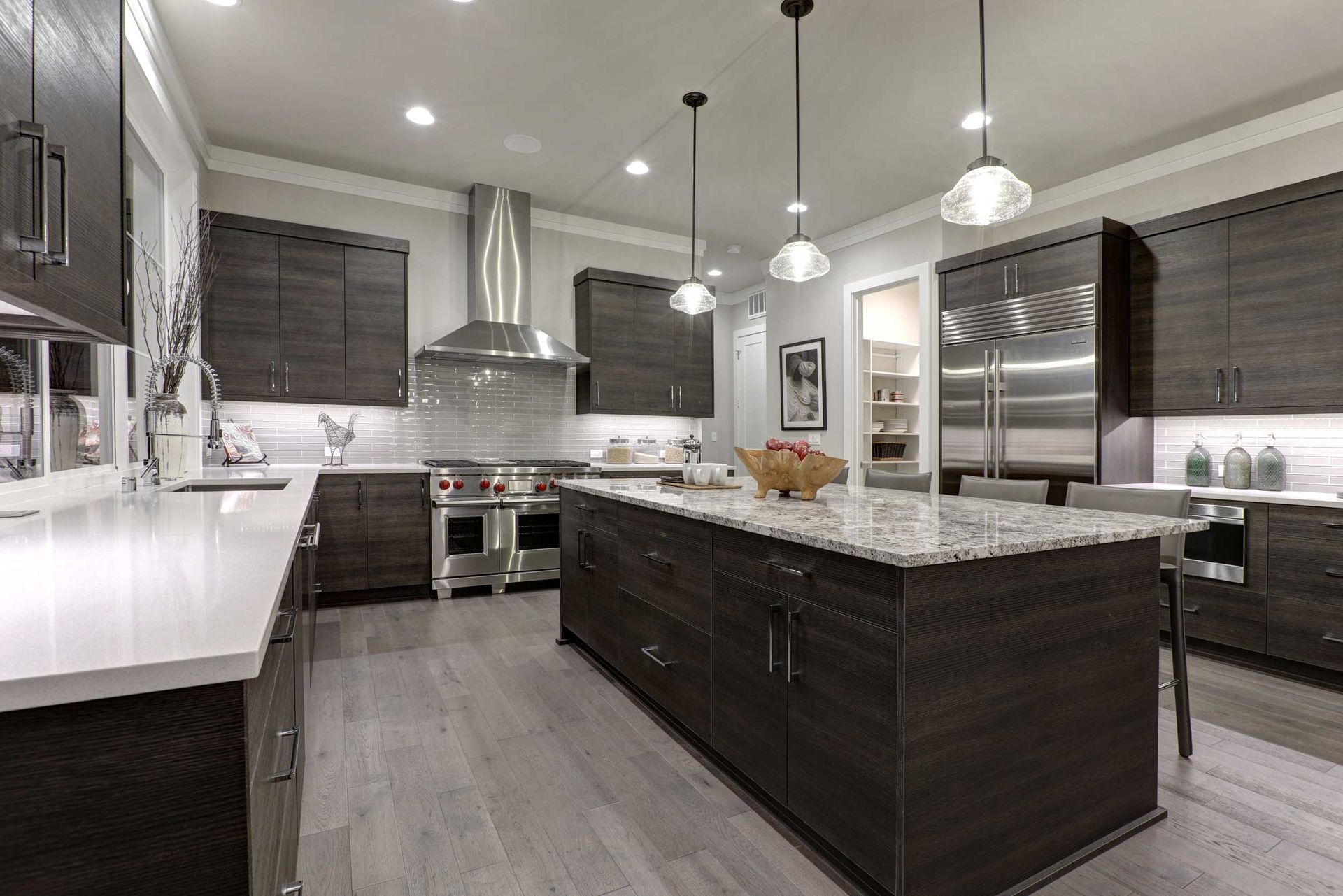
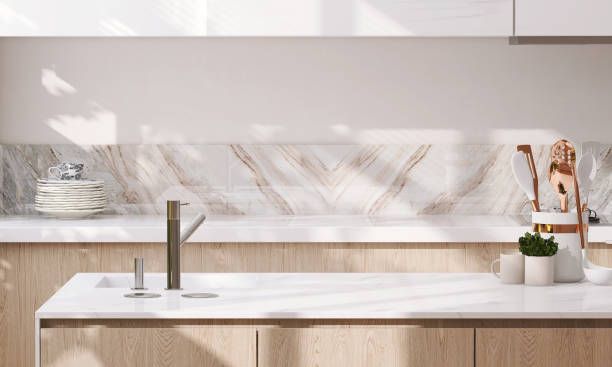
Design flexibility separates these materials in ways that surprise homeowners. Granite offers unique veining and natural patterns; no two slabs match exactly. If you want a one-of-a-kind island that anchors your kitchen, granite delivers. Quartz provides aesthetic consistency, which means large islands and countertops show uniform color and pattern across the entire surface. For modern, minimalist designs, that consistency is a feature.
Edge profile durability favors quartz for intricate profiles. Granite's natural composition makes it more prone to chipping on sharp, detailed edges like ogee or bevel cuts. A eased or bullnose edge reduces that risk. Quartz holds detailed edge profiles more reliably because its engineered composition distributes stress evenly.
Repairability presents another contrast. A small chip in granite can often be repaired with epoxy matched to the stone, a project a handy homeowner might attempt. Quartz chips typically require professional repair because matching the pattern and finish demands specialized materials. For DIY-minded homeowners, granite's repairability is an underappreciated advantage. For those who prefer professional handling, the distinction matters less.
The right choice for a busy kitchen depends on which failure mode you can live with. Granite forgives heat but demands sealing and careful spill response. Quartz forgives spills but punishes heat and harsh chemicals. Consider your cooking habits, your tolerance for maintenance, and how long you plan to stay. A free in-home consultation helps you see slab options in person and match them to your actual kitchen workflow.