

What to Expect During the Countertop Template Process
How to Prepare for Countertop Templating
Good preparation makes the visit faster and the results more accurate. You do not need to do much, but a few steps help the technician work without interruption.
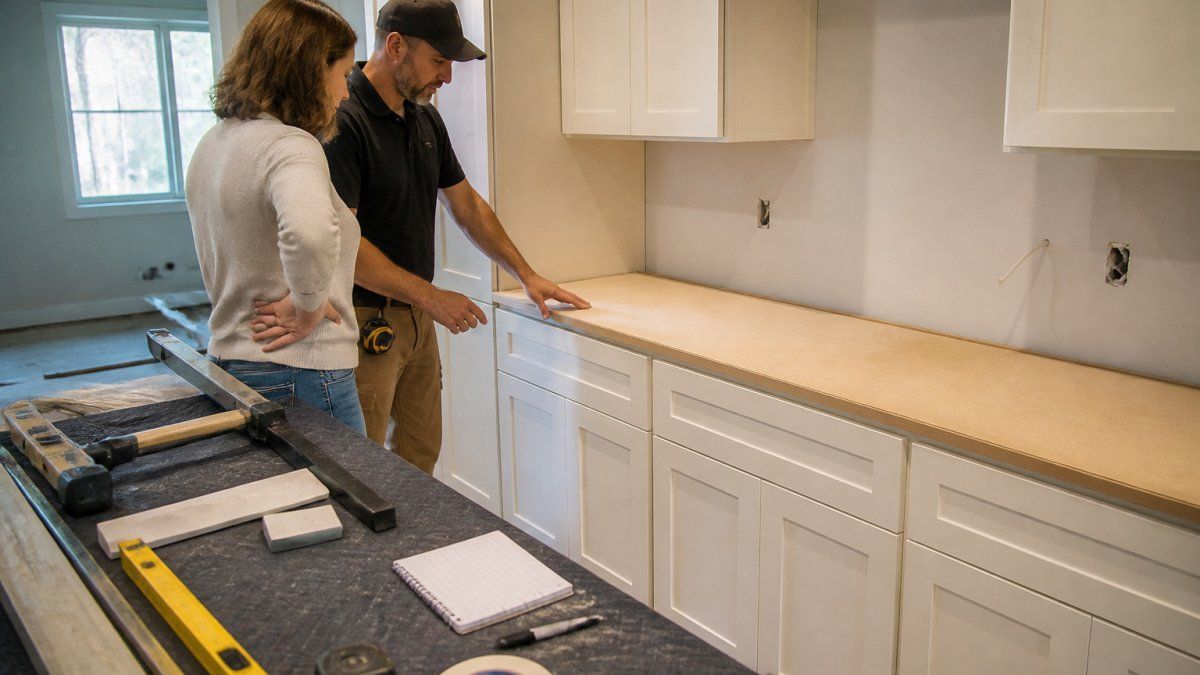
Clear the counters and the area around them. Remove small appliances, dishes, and decor so the technician can reach every edge. Make sure the path from the door to the kitchen is open and that pets are secured.
Gather any paperwork you have. Bring your design plans, cabinet specs, and any notes about appliances you plan to install. If you have chosen a sink or faucet, have the model number ready, since its cutout size affects the template.
Plan to be home for the visit. The technician may have questions about layout or your preferences, and quick answers can save a return trip. The length of the visit depends on the size and complexity of your space, so ask your Luther Falls representative for an estimate when you book.
How Long Countertop Templating Takes
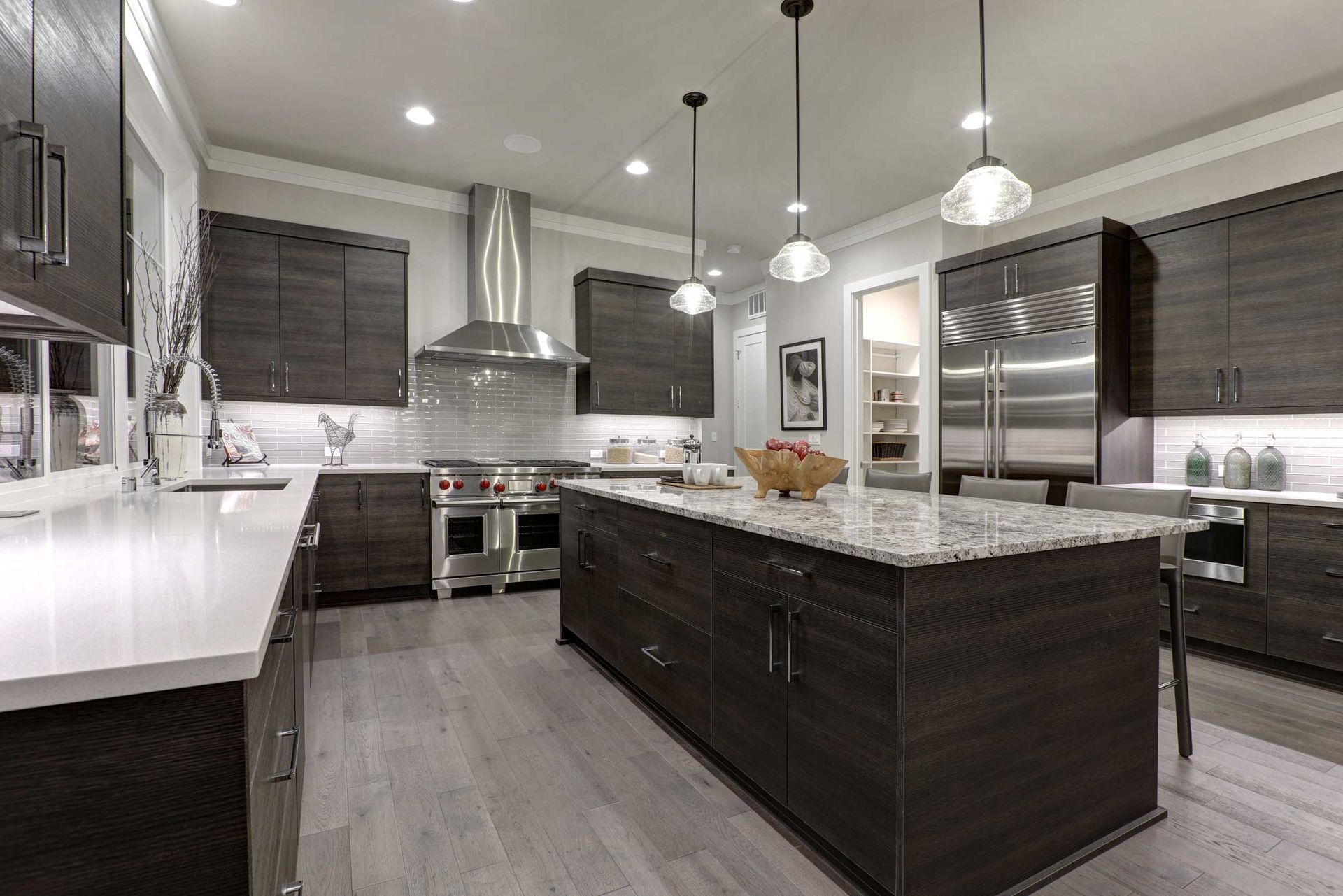
The measuring visit takes longer for a kitchen with an island, multiple angles, and several cutouts than for a simpler layout.
Several factors affect the time needed:
- The number of counter sections and seams
- Whether the layout includes angles or curved edges
- How many sink, faucet, and cooktop cutouts are planned
- Whether cabinets need adjustment before measuring
The time from templating to installation depends on fabrication schedules, so ask your Luther Falls representative for the timeline that applies to your project. Templating is typically one step in a longer process that also includes design approval, fabrication, and installation.
Templating time depends on several layout factors, which are summarised below.
| Factor | Effect on time | Note |
|---|---|---|
| Counter sections and seams | More sections take longer | Each section is measured separately |
| Angles or curved edges | Adds measuring time | Angles must be captured accurately |
| Sink, faucet, and cooktop cutouts | Adds measuring time | Each cutout is recorded in the template |
| Cabinet adjustment needed | Can delay the visit | Cabinets should be fully installed first |
Measuring Angles, Walls, and Uneven Spaces
Real homes are rarely perfectly square. Walls can lean, floors can slope, and corners often are not true right angles. A careful template accounts for these differences so the finished countertop fits against the wall.
Here is what a templater typically checks, and why each check matters:
- Wall plumb and straightness. A wall that bows inward by even a quarter inch can create a visible gap at the countertop edge. The technician records the high and low points so the fabricator can scribe the countertop edge to follow the wall rather than sit away from it.
- Cabinet level and securement. Cabinets that are not level or not fully fastened to the wall can shift after templating. The template captures the cabinet as it sits today; if the cabinet moves later, the countertop will not fit. This is why the visit should happen only after cabinets are installed, shimmed, and screwed off.
- Corner angles. The technician measures the actual angle at each corner rather than assuming 90 degrees. An out-of-square corner changes the seam layout and the cut dimensions, so it must be captured before fabrication.
- Floor slope and toe-kick clearance. A sloping floor can affect how the countertop sits relative to the cabinet run and whether appliance openings will clear.
- Appliance and fixture clearances. The template must account for the actual positions of the range, refrigerator, and dishwasher, not the positions on the plan.
The goal is a template that reflects the room as built, not as drawn.
If your kitchen has odd angles, a smaller footprint, or a wall that visibly leans, mention it when you book the appointment. The technician can bring the right tools and allow extra time, which is far easier than discovering the issue on fabrication day.
Sink and Faucet Cutouts During Templating
Sink and faucet cutouts are one of the most important details captured during templating. The template shows where the sink will sit, how large the opening should be, and where faucet holes must go. Errors here are costly, so the team confirms these details carefully.
Bring your sink model number or spec sheet to the visit. Undermount and drop-in sinks need different cutout dimensions, and the template must match the exact unit. If you have not chosen a sink yet, the technician can advise on common sizes, but it is best to decide before fabrication begins.
Also confirm the faucet position. Some faucets mount through the countertop, while others mount to the wall or deck. Tell the technician which faucet you plan to use so the holes line up correctly.
What Happens After Countertop Templating
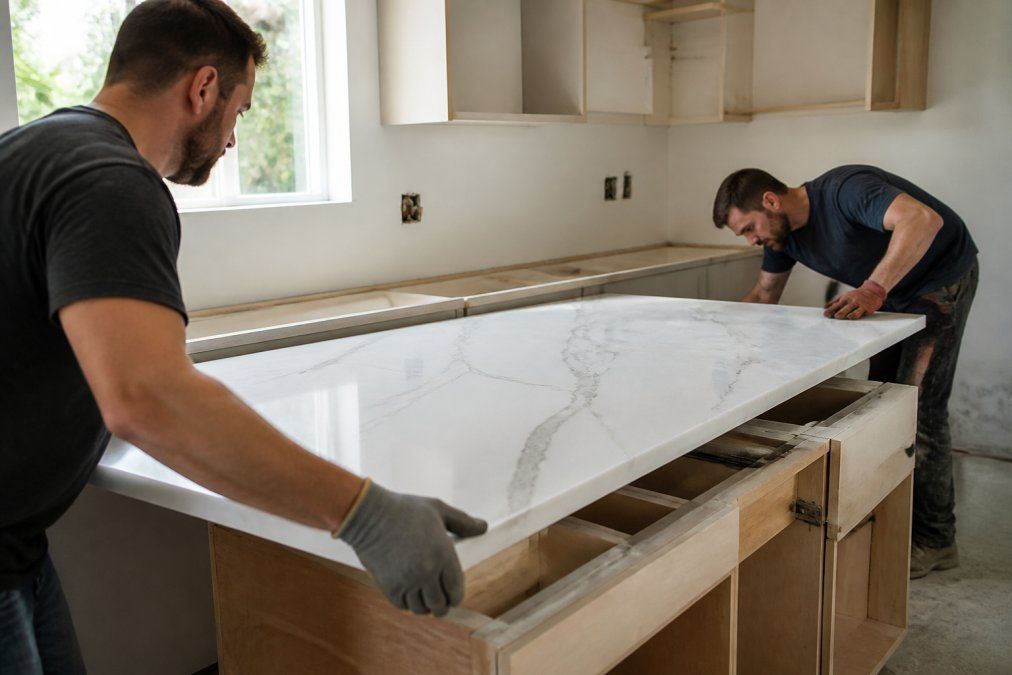
Once the measurements are complete, the template goes to fabrication, where it is used to cut your countertop from the chosen slab. Your job is mostly to review the final layout and confirm that your choices are still correct.
Before fabrication, your representative should review the template with you. Check the seam locations, edge profiles, and cutout positions. Making changes at this stage is far easier than after the stone is cut, so take time to look closely.
After fabrication, the countertop is installed in your home. Installation is typically scheduled once the stone is ready. One-day countertop installation may be available, so ask your representative about the timeline for your project. Ask your representative about the installation timeline for your project.
Reading the results: what is normal and what is not
After installation, homeowners often notice small variations and wonder whether something went wrong. A clear diagnosis guide helps you tell a normal fit from a real problem.
Normal and expected:
- A small, consistent gap between the countertop and a wall that is out of plumb, filled with a flexible sealant or caulk.
- A seam that is visible but tight and level, especially where two slabs meet.
- Slight color or pattern variation between slabs, which is inherent to natural stone and some engineered quartz.
Worth a call to your fabricator:
- A gap that varies in width along a single wall, which can indicate the template did not capture the wall's variation.
- A seam that is raised, chipped, or noticeably wider than the fabricator's stated tolerance.
- A cutout that does not align with the sink or cooktop, or a faucet hole that sits off-center.
- A countertop that rocks or feels unstable, which can point to an unlevel cabinet or an installation issue.
Not a templating problem, damage or wear:
- Etching: dull, light-colored spots on quartz or natural stone, often from acidic cleaners or spills. Etching is surface damage, not a fit issue, and may require professional polishing.
- Heat damage: discoloration or cracking near a cooktop or where a hot pan was placed. Engineered quartz can be damaged by sustained heat, and this is generally not covered by routine care guidance.
- Scratches and chips: physical damage from abrasive pads, blades, or impact. These are not caused by templating and usually need a fabricator or stone restoration professional.
- Stubborn mineral deposits: white, crusty buildup around faucets that does not respond to warm water and mild dish soap. This is a water-quality issue, not a template error, and should be treated with a graduated, quartz-safe method rather than an abrasive tool.
If a mark or fit issue appears within the first weeks after installation, document it with photos and contact your fabricator promptly. Most issues are easier to resolve when reported early, and a clear description of what you see, gap, seam, etch, or heat mark, helps the team route the fix correctly.
Booking Your Free In-Home Consultation with Luther Falls
Luther Falls is a family-owned business that has been in business since 1954, with four generations of experience in countertops and custom cabinetry. Our team guides you from initial 3D design through final installation. We offer a free in-home consultation.
If you are ready to plan your template visit, call today for a free in-home consultation to get started. You can also explore our full range of countertop options to compare granite, quartz, and soapstone before you decide. Homeowners in Decatur who are considering quartz can review our quartz countertop services in Decatur for local details. Once you know what to expect, you will be ready to take the next step with confidence.